


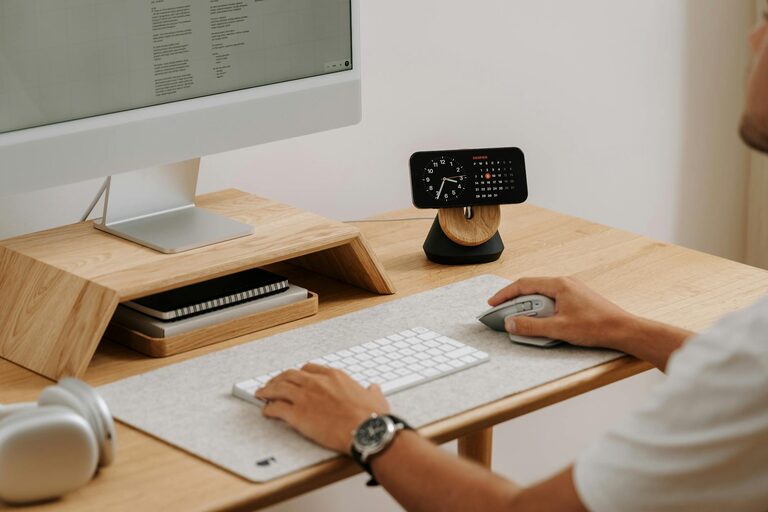
Creating a productive home workspace is essential for anyone working remotely or managing tasks from home. A well-organised and thoughtful environment not only helps you stay focused but also improves your overall work experience. Whether you have a dedicated room or a small corner in your living space, these effective tips will guide you to set up a functional and motivating workspace.
Choose the Right Location
Finding an appropriate spot for your workspace is the first step. Ideally, this space should be quiet, free from frequent distractions, and well-lit. A separate room is perfect if available, but if not, consider a part of your room or living area that can be dedicated to work.
– Ensure good natural light by positioning your desk near a window.
– Avoid areas with heavy foot traffic.
– Consider your commuting distance within the house—even a short walk may help mentally separate work and relaxation.
Invest in Comfortable and Functional Furniture
Comfort is key to staying productive during long hours of work. Take the time to select furniture that supports your posture and work habits.
– Ergonomic chair: An adjustable chair with lumbar support can reduce strain on your back.
– Desk height: Choose a desk at a comfortable height to avoid slouching or reaching.
– Desk size: Ensure there is enough space for essential equipment like your computer, notepad, and other tools without clutter.
If your budget is tight, simple adjustments like adding cushions or footrests can improve comfort.
Declutter and Keep Essentials Handy
A cluttered space can disrupt your focus. Organising your workspace to keep only what you need within arm’s reach helps maintain a clean and efficient environment.
– Use desk organisers or trays for stationery.
– Store documents in labelled folders or filing cabinets.
– Clear surfaces at the end of every day to prepare for the next.
Use Effective Storage Solutions
Proper storage ensures your workspace remains tidy and everything has its designated place.
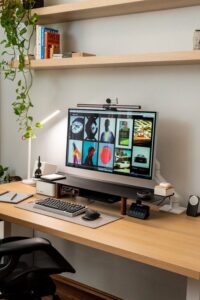
– Floating shelves or wall-mounted organisers free up desk space.
– Drawers or boxes under the desk can store less-used items.
– Cable management systems prevent unsightly tangles.
Regularly review and purge items you no longer need to avoid accumulation.
Optimise Lighting
Good lighting reduces eye strain and keeps you alert.
– Maximise natural light during the day.
– Use adjustable desk lamps with daylight bulbs for consistent illumination.
– Avoid glare on computer screens by positioning lights thoughtfully.
Personalise Your Workspace
Adding personal touches can make your home office inviting and boost morale.
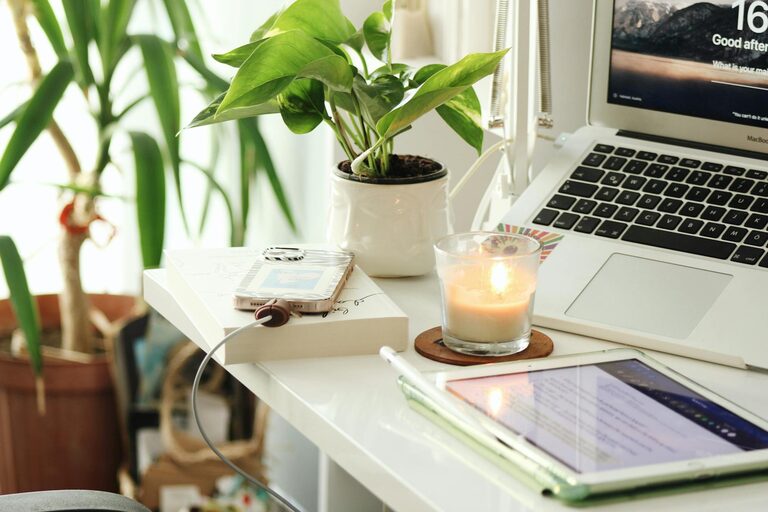
– Display a few favourite photos, artwork, or plants.
– Choose colours that inspire you—soft blues for calm, green for creativity, or warm tones for energy.
– Incorporate scents like essential oils or candles if you find them relaxing.
Balance personalisation with professionalism, especially if attending video calls.
Minimise Distractions
Maintaining concentration is often easier said than done at home. Try these strategies:
– Set clear boundaries with family or housemates about your working hours.
– Use noise-cancelling headphones or ambient sound apps.
– Turn off non-essential notifications on your devices.
– Keep your phone in another room if possible during deep work periods.
Establish a Routine and Work Zones
Defining when and where you work helps your brain associate the space with productivity.
– Begin and end work at set times.
– Use the workspace only for work to create mental separation.
– Incorporate breaks and movement to avoid fatigue.
Technology and Connectivity
Reliable technology supports smooth and productive work.
– Ensure a good internet connection.
– Invest in a quality webcam and microphone if video calls are frequent.
– Keep your computer and software updated.
– Organise your digital files as you do your physical workspace.
Take Care of Your Wellbeing
Your physical and mental health impact your productivity.
– Maintain good posture.
– Keep hydrated and snack healthily.
– Take regular breaks away from screens.
– Use your workspace to foster focus, but leave it behind at the end of the day.
—
Final Thoughts
A productive home workspace doesn’t require a complete overhaul or a large budget. Thoughtful organisation, comfort, and minimal distractions are the cornerstones of effective home office design. By implementing these tips, you can create a space that supports your work goals and helps you stay motivated every day. Remember, the best workspace is one that suits your individual needs and habits, so feel free to experiment and adjust to find what works best for you.